

The Bachelor of Marine Science programme provides you with the skills to help create a sustainable future for the world’s oceans. You will gain access to stunning marine environments rich in biodiversity right on your doorstep. Become an expert in ocean systems by delving into a wide range of disciplines, including marine biology and ecology, oceanography, marine mapping, conservation, aquaculture, fisheries, and marine and coastal management.
Dummy…
Compulsory modules conducted by RIC
Second and third year modules will be conducted at Deakin University, Australia (After successfully completing the first year modules**)
Available majors to choose from, in the second and third years at Deakin University, Australia:
• Ocean, Fisheries and Aquaculture Sciences*
• Sustainable Marine Management*
*Enrolment in a Trimester 3 study period at Deakin may be required to achieve this major
This qualification and experience will set you up for career success in a variety of areas including:
This list is non-exhaustive
RIC provides the only licensed pathways in Sri Lanka, to Deakin University’s Engineering, Science, Environmental Science, Software Engineering and Data Science degrees. At RIC, pathway students will follow Deakin University’s curriculum, from day one. By mirroring the curriculum and assessment structure of Deakin University, the students in the RIC pathway are able to meet intended course-related learning outcomes, which are similar to those studying at Deakin in Australia. This increases the students’ chances of academic success, after transferring to Deakin. RIC is also the only institute in Sri Lanka to provide innovative co-teaching in the pathway with Deakin University.
One of the key advantages of this pathway program is the opportunity for students to experience Australian teaching with the newly introduced co-teaching initiative. This allows students to learn face-to-face from Australian lecturers from Deakin University, as well as RIC lecturers. This direct interaction with Australian lecturers not only enhances the depth of understanding but also provides unique insights into the subjects, setting the stage for academic brilliance. Refer this paper article to know more about this innovative teaching approach: https://www.sundaytimes.lk/240114/education/royal-institute-of-colombo-revolutionises-tertiary-stem-education-in-sri-lanka-through-innovative-co-teaching-545047.html
This initiative bridges the gap in students’ learning outcomes, ensuring that they arrive in Australia with academic knowledge equivalent to their counterparts who started their studies at Deakin from the begining. This parity guarantees a smooth transition and academic success, paving the way for promising global careers. As per the recent student survey conducted, 100% of our students who experienced co-teaching have agreed that it has effectively improved the overall quality of their learning experience. Watch this short video to see what our students have to say on their co-teaching experience: https://www.facebook.com/RoyalInstituteCMB/videos/experience-the-quality-of-deakin-transfer-programmes-at-ric-through-dinevmie-met/738181358204070/
RIC is provding a pathway to Deakin and it’s a compulsory requirement for students to transfer to Deakin on-campus to complete their last 2 years of the degree.
Foundation programmes are conducted and awarded by RIC under the approval of Deakin University. At the completion of the RIC pathway to Deakin, you are eligible to receive a Diploma (1 year completion) or Advanced Diploma (2 year completion) at the RIC Convocation. This qualification is awarded by RIC. Once you completed the last two years of the degree at Deakin, the degree qualification is awarded by Deakin University, Australia. All the Deakin engineering degree programmes are accredited by Engineers Australia (EA) which is the accreditation authority for tertiary engineering education in Australia and overseas. All the Science/Environmental Science/IT degree programmes are recognised by the relevant accredited authorities internationally. To learn more about Deakin, please refer: https://www.deakin.edu.au/international-students?cid=sem%7Cggl%7Cdein%7Cna%7Cna%7Cbau22%7Cpr%7Ctext&gad_source=1&gclid=EAIaIQobChMI08iog7L9hQMVAQ-DAx2rIgksEAAYASAAEgKbjPD_BwE
Yes, the allowable time duration for part time work depends on the Australian government regulations published and renewed time to time. As per the current regulations, during academic terms, you can do part time work upto 48 hours per fortnight and during vacation, no restriction on the number of hours. These regulations may change depending on the situation. In addition to this, students will be getting 2-3 years of visa extension (PSW-Post Study Work rights) after they complete their last 2 years of studies at Deakin. For more details, please refer: https://immi.homeaffairs.gov.au/visas/getting-a-visa/visa-listing/student-500
Yes, as a value added support service, RIC is providing the counselling service for university transfer as well as for the visa process to our students. This is a free service RIC is providing to our students.
The funding (and other) requirements for student visa depend on the conditions set by the Australian High Commission. Students and their parents can refer: https://immi.homeaffairs.gov.au/visas/getting-a-visa/visa-listing/student-500#Eligibility for latest information. In general, the student’s sponsor/s should have enough fund to cover up the total expenses of the student in Australia during the last two years of studies at Deakin. This includes the annual Deakin tuition fee, living cost, air fare and any other associated expenses. You can also visit RIC and get more details about the requirements.
RIC is having a license agreement with Deakin and we are very keen on students’ progress after the completion of RIC pathway. Hence we makesure our students have a clear idea and focus on their end qualification by the time they commence at RIC. Students enrolled at RIC are ‘Destination Deakin’ students. As we are teaching Deakin University curriculum, we are providing and facilitating students to transfer to Deakin only. However, if any student wishes to transfer to any other university in Australia or elsewhere, they need to connect with the relevant universities by themselves and get their credits transferred towards the course applied.
Deakin University is ranked in the first 50 young universities in the world. Deakin is the number 1 university among all the universities in the Australian state of Victoria for the overall student satisfaction for 13 years in a row. Deakin is also ranked the #1 university for graduate qualities and skills in the Australian state of Victoria. Deakin University is ranked in the first 1% of universities worldwide. For the detailed rankings of Deakin University, please refer: https://www.deakin.edu.au/sources
Deakin university is maintaining an up-to-date curriculum across it’s all programmes. The curriculum and assessments are developed to makesure, the students will gain relevant skills required by the industry to make them job-ready, once graduated. As the Deakin university’s license curriculum provider, RIC is also providing the same experience to the students in the pathway. With this intention, the subjects you are learning in the programmes are having a variety of assessment methods including in-class tests, individual projects, team presentations, report writing, quizzes, practical assessments, group discussions, consensus workshops, project-oriented design based tasks, capstone programmes, internship based tasks etc. You will also have end trimester and mid trimeseter exams for some subjects. All the assessmet tasks will carry some weightage towards your final grade of the respective subject. To learn more about Deakin Engineering teaching styles, please watch this video:
The International Foundation Diploma for Higher Education Studies (L3IFDHES) is an Ofqual and Qualification in Wales (QiW) – regulated qualification designed to prepare students for entry into undergraduate degree programs, after O/Ls. Offered by NCC Education, this diploma provides students with essential academic and English language skills necessary for success in higher education. The programme is widely recognised by universities worldwide and serves as a direct pathway to degree studies in various disciplines.
Who is this Programme for
An IELTS score of 4.5 or above.
OR
*This requirement does not apply to students who have completed English Language as a subject in Pearson Edexcel IGCSE or Cambridge IGCSE and have achieved a minimum grade of C or above.
The NCC foundation programme is a Level 3 qualification (A/L equivalent) with a total credit value of 120. Students engage in core academic skill development, subject-specific learning, and English language enhancement.
Core Units
Developing English Language Skills (20 credits)
English for Academic Purposes (30 credits)
Research and Study Skills for University Study (20 credits)
Mathematics for University Study (10 credits)
Streams we offer:
Engineering
Physics for University Study (20 credits)
Further Mathematics for University Study (20 credits)
Life and Environmental Sciences
Chemistry for University Study (20 credits)
Biology for University Study (20 credits)
Business or Law
Introductory Economics (20 credits)
International Business (20 credits)
Information Technology
Introduction to Programming with Python (20 credits)
Introduction to Computer Science (10 credits)
Digital World (10 credits)
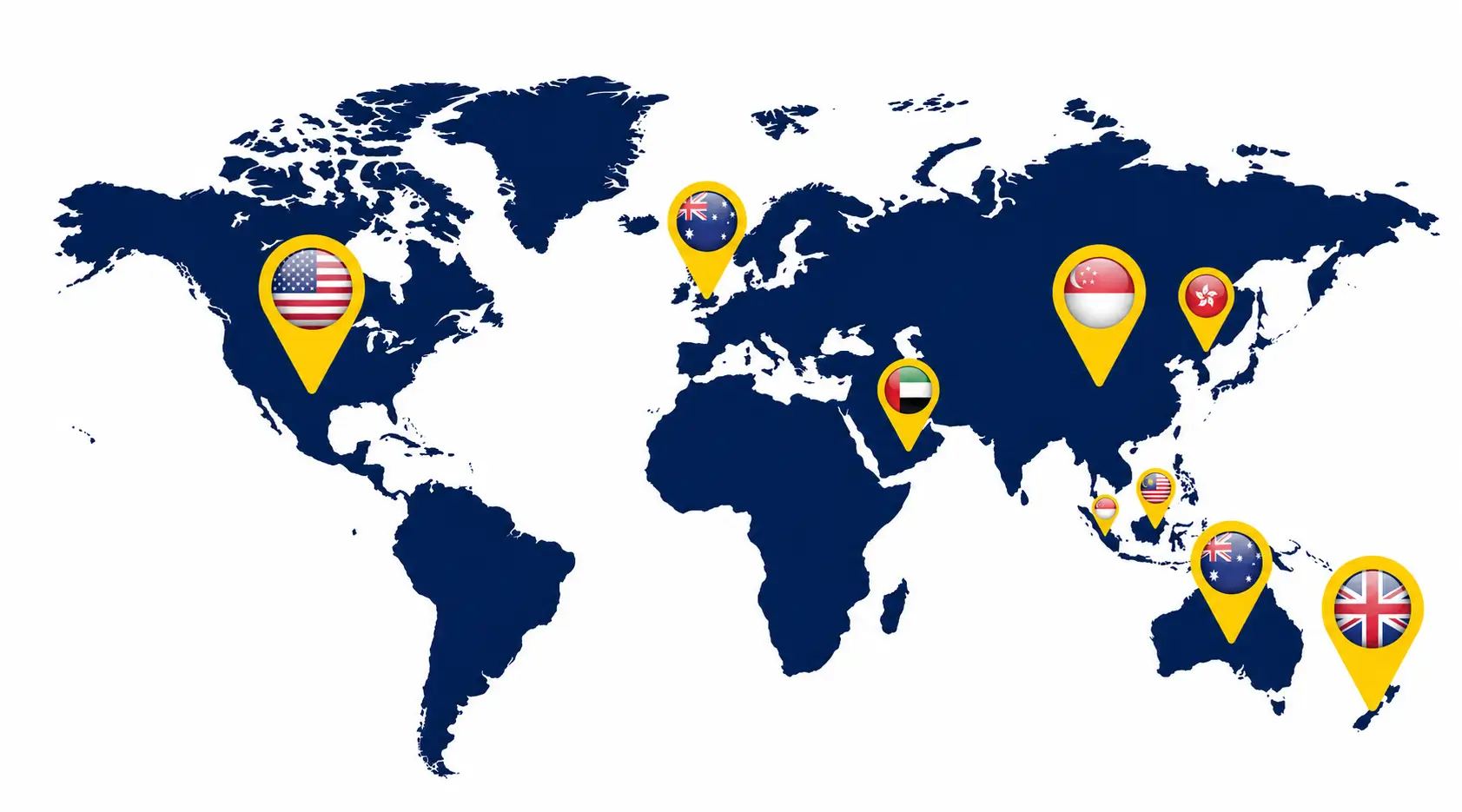
The NCC foundation programme is recognised by universities in the UK, Australia, Canada, China, Singapore, New Zealand, the USA, and beyond. Students can enrol in international university branch campuses and continue their studies globally.
London School of Economics (LSE) (United Kingdom) – Ranked 6th in the world for Social Science and Management*
King’s College London (United Kingdom) – Ranked 9th in the world for Psychology
University of Nottingham (United Kingdom) – Ranked 86th globally*
University of Sheffield (United Kingdom) – Ranked 96th globally*
University of York (United Kingdom) – Ranked 78th globally*
Deakin University (Australia)*** – Ranked in the top 200 globally*
Curtin University – (Australia, Malaysia, Dubai, Mauritius, Singapore) – Ranked 95th globally*
University of Queensland (Australia) – Ranked 41st globally*
University of Western Australia (Australia) – Ranked 72nd globally*
University of Hong Kong (Hong Kong) – Ranked 17th globally*
and many more Universities…
***Through the pathway at RIC
FAQs