Bachelor of Science (Honours) in Biomedical Sciences - MoHE/ UGC approved programmes

Duration

4 year

Awarding Body

University of London

Academic Direction

LSE, UCL, Queen Mary University of London, SOAS University of London and King's College London

Delivery

Full-time/Physical

Intake

May/Sep

Programe Overview

The Bachelor of Science (Honours) in Biomedical Sciences at RIC provides a comprehensive exploration of human biology, disease mechanisms, and cuttingedge medical research. With a curriculum spanning Genetics, Immunology, Pharmacology, Healthcare Marketing, Lab Training, and Molecular Biology, students acquire a deep understanding of foundational biomedical concepts. This programme prepares graduates for versatile career avenues such as biomedical research, pharmaceuticals, clinical laboratory science, and healthcare management, empowering them to drive forward transformative advancements in healthcare.

Who...

Dummy…

Entry Requirements

  • 3 S passes for Biology, Chemistry and Physics or Agricultural Science subjects, in one and at the same sitting at the Advanced Level examination conducted by the Department of Examinations of Sri Lanka or acceptable equivalents of either Cambridge or Edexcel.
  • Pass the internal Admission Test and interview

Programe Structure & Course Modules

First Year Course Units

Semester – 1

  • EC 00011 Foundation course in IT
  • EC 00022 Mathematics for Biology
  • BMSC 11011 Laboratory & Field Work Safety Induction
  • BMSC 11014 General Chemistry
  • BMSC 11022 Organic chemistry
  • BMSC 11032 Cell Biology
  •  BMSC 11043 Human Anatomy I
  • BMSC 11053 Human Physiology I

Semester – 2

  • BMS 12063 Physics for Biomedical Science
  • BMS 12073 Human Physiology II
  • BMS 12082 Biochemistry I
  • BMS 12093 General Microbiology
  • BMS 12102 Human Genetics & Introduction to Molecular Biology
  • BMS 12112 Histology

Second Year Course Units

Semester – 1

  • BMS 21013 Biochemistry II
  • BMS 21023 General Pathology
  • BMS 21033 Medical Parasitology and Entomology
  • BMS 21042 Molecular Basis of diseases
  • BMS 21052 Biostatistics
  • BMS 21063 Biomedical Instrumentation

Semester – 2

  • BMS 22073 Clinical Biochemistry I
  • BMS 22083 Haematology I
  • BMS 22092 Medical Bacteriology
  • BMS 22103 Medical Virology and Mycology
  • BMS 22113 Clinical Immunology

Third Year Course Units

Semester – 1

  • BMS 31013 Haematology II
  • BMS 31023 Clinical Biochemistry II
  • BMS 31042 Diagnostic Histopathology and Cytopathology
  • BMS 31053 Biotechnology and Applications
  • BMS 31063 Laboratory Management

Semester – 2

  • BMS 32073 Clinical Nutrition
  • BMS 32083 Diagnostic Microbiology
  • BMS 32093 Laboratory Quality Assurance and Accreditation
  • BMS 32103 Research Methodology and Bioethics
  • BMS 32122 Remote Sensing GIS and GPS
  • BMS 41024 Pharmacology and Toxicology

Fourth Year Course Units

Semester – 1

  • BMS 41013 Principles of Epidemiology
  • BMS 41023 Medical Bioinformatics
  • BMS 41033 Stem Cell Biology and Therapy
  • BMS 41042 Scientific Writing & Presentation of the Research Proposal
  • BMS 41054 Laboratory Training

Semester – 2

  • BMS 42062 Case Study and Seminar (Self Learning Module)
  • BMS 42076 Research Project Options (have to select modules to cover 6 credits)
  • BMS 42082 Microbial Pharmaceutical Products
  • BMS 42092 Nanobiotechnology
  • BMS 42102 Biomaterials
  • BMS 42112 Healthcare Marketing

Career Opportunities

These Qualifications and Experience will set you up for career success in variety of areas and professions.

  • Medical Laboratory Technology
  • Phlebotomist
  • Clinical Laboratory Scientist
  • Blood Bank Technologist
  • Histotechnologist
  • Healthcare Assistant/
    consultant/administrator
  • Biomedical Scientist
  • Research Scientist
  • Project coordinators
  • Product Development Scientist
  • Clinical Trials Coordinator
  • Biotech Entrepreneur
  • Medical Device Developer
  • Research and Development
    officer
  • Microbiologist /Chemist
  • Quality Control Analyst
  • Laboratory Instructor/
    demonstrator / Lecturer
  • Research Assistant in Academia
  • Technical Officers/Lab
    technicians in universities
  • Clinical Scientist
  • Biomedical Consultant
  • Research Scientist
  • Laboratory Technici

FAQ

What is the ranking of the University of London (UoL)?

Since the University of London is a consortium – as association of many Universities, you need to look at the rankings of individual universities if you are looking for the ranking of UoL. The rankings for each of the Universities provide a good measure of the kind of degree you are embarking upon, its recognistion, capabilities of graduates and alumni as well as the up-to-date curriculum etc.


If the student has a Bachelor’s Degree from a recognised university (acceptable to UoL), one year exemption is given, that is, 3 modules are exempted as follows: 

  • UoL encourages Graduate Entry students to pace themselves when following this route – ideally 3 years (3 modules per year = 9 modules). 
  • A two-year pathway is retained for GE students who pass all four modules in their first year of study and at the first attempt in the May/June assessments. In case a student fails at least one module in their first attempt. the degree gets extended to 3 years. 
 
No exemptions are currently provided for any other professional qualifications other than for a bachelor’s degree in any field.

Changes to the vocational stage of training for solicitors and barristers have been introduced. The following websites should be consulted for updates: The Law Society – https://www.lawsociety.org.uk/career-advice/becoming-a-solicitor/

Solicitors Regulations Authority – https://www.sra.org.uk/

You will find most of the details in the RIC website, the RIC prospectus as well as in the prospectus of the University of London as well:

You need to complete the examinations that will be held by the Sri Lanka Law College. Further information can be found in this Gazette Notification found in the Sri Lanka Law College website. If you need further clarifications, you can contact the Chief Academic Coordinator – LLB at RIC. ([email protected]) 

Sri Lanka Law College – http://www.sllc.ac.lk/ 
Programme Overview

The International Foundation Diploma for Higher Education Studies (L3IFDHES) is an Ofqual and Qualification in Wales (QiW) – regulated qualification designed to prepare students for entry into undergraduate degree programs, after O/Ls. Offered by NCC Education, this diploma provides students with essential academic and English language skills necessary for success in higher education. The programme is widely recognised by universities worldwide and serves as a direct pathway to degree studies in various disciplines.

Who is this Programme for

  • A GCSE/IGCSE ‘O’ Level or an equivalent qualification in your home country, with passes in at least five subjects (minimum grade ‘C’ or equivalent), including Mathematics and English.
  • An IELTS score of 4.5 or above.

OR

  • Students can take the free NCC Education Standard English Placement Test administered by us.

*This requirement does not apply to students who have completed English Language as a subject in Pearson Edexcel IGCSE or Cambridge IGCSE and have achieved a minimum grade of C or above.

The NCC foundation programme is a Level 3 qualification (A/L equivalent) with a total credit value of 120. Students engage in core academic skill development, subject-specific learning, and English language enhancement.

Core Units

  • Developing English Language Skills (20 credits)

  • English for Academic Purposes (30 credits)

  • Research and Study Skills for University Study (20 credits)

  • Mathematics for University Study (10 credits)

Streams we offer:

Engineering

  • Physics for University Study (20 credits)

  • Further Mathematics for University Study (20 credits)

Life and Environmental Sciences

  • Chemistry for University Study (20 credits)

  • Biology for University Study (20 credits)

Business or Law

  • Introductory Economics (20 credits)

  • International Business (20 credits)

Information Technology

  • Introduction to Programming with Python (20 credits)

  • Introduction to Computer Science (10 credits)

  • Digital World (10 credits)

Upon completion of the UK Foundation programme, students gain access to a wide range of undergraduate programs worldwide. Many universities offer direct entry into the first year of a degree in disciplines such as:
  • Business & Management
  • Economics & Finance
  • Computing & IT
  • Engineering & Science
  • Psychology
  • Law & International Relations
  • Health Sciences
This includes entry into our University of London EMFSS, Laws, and Psychology programmes, as well as the Deakin pathway programme at RIC.

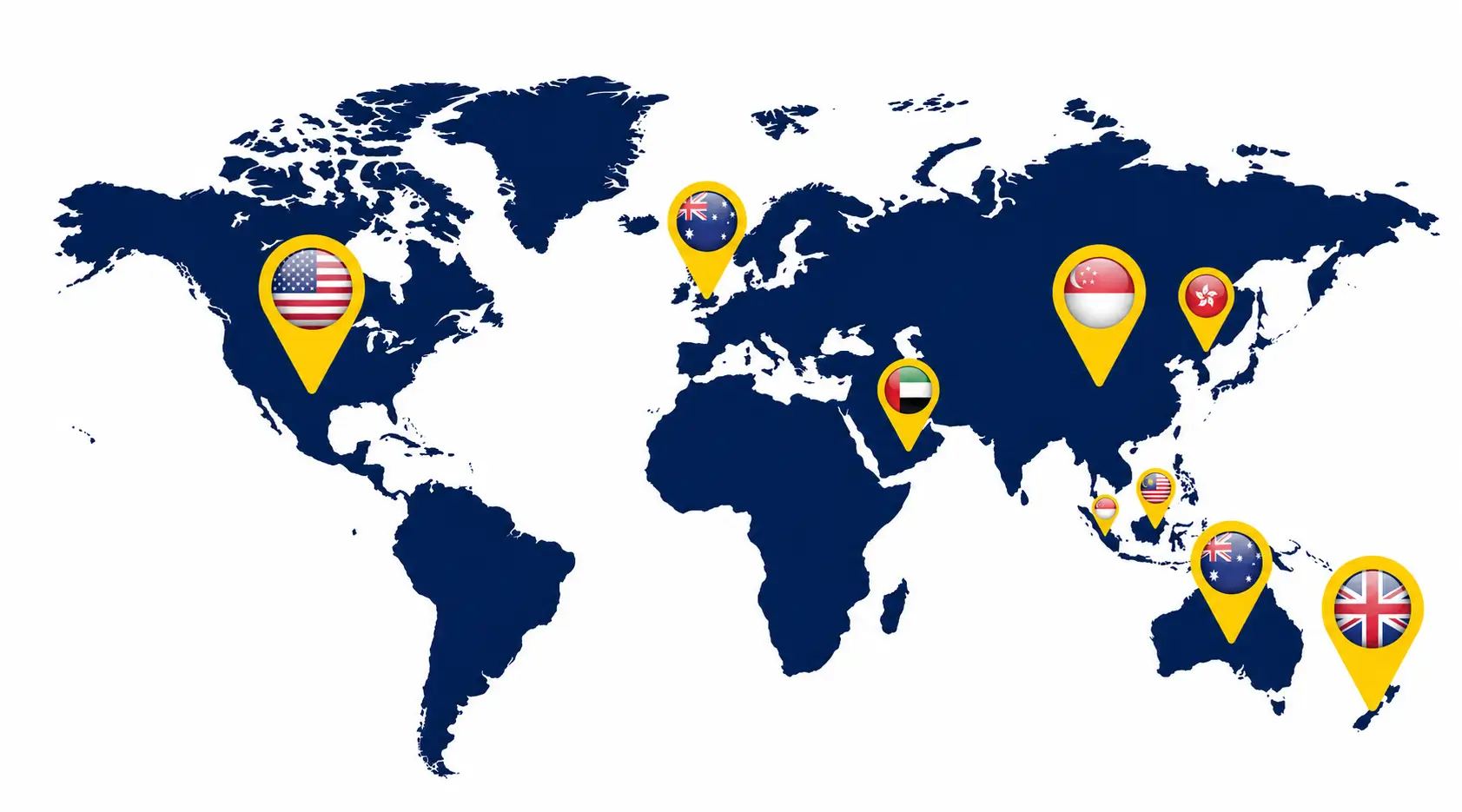
The NCC foundation programme is recognised by universities in the UK, Australia, Canada, China, Singapore, New Zealand, the USA, and beyond. Students can enrol in international university branch campuses and continue their studies globally.

 
  • London School of Economics (LSE) (United Kingdom) – Ranked 6th in the world for Social Science and Management*

  • King’s College London (United Kingdom) – Ranked 9th in the world for Psychology

  • University of Nottingham (United Kingdom) – Ranked 86th globally*

  • University of Sheffield (United Kingdom) – Ranked 96th globally*

  • University of York (United Kingdom) – Ranked 78th globally*

  • Deakin University (Australia)*** – Ranked in the top 200 globally*

  • Curtin University – (Australia, Malaysia, Dubai, Mauritius, Singapore) – Ranked 95th globally*

  • University of Queensland (Australia) – Ranked 41st globally*

  • University of Western Australia (Australia) – Ranked 72nd globally*

  • University of Hong Kong (Hong Kong) – Ranked 17th globally*

  • and many more Universities…

     
*According to the QS World University Rankings 2025
According to the Times Higher Education World University Rankings by Subject 2025

***Through the pathway at RIC


FAQs