Practical Skills in Biomedical Science

Duration

3 year

Awarding Body

University of London

Academic Direction

LSE, UCL, Queen Mary University of London, SOAS University of London and King's College London

Delivery

Full-time/Physical

Intake

March/July/Sep

Short Course for After A/L Students

Step into the World of Biomedical Science

Build real laboratory skills, gain hands-on experience, and explore the foundations of biomedical science – designed for students preparing for higher education in science and healthcare fields.

Who This Course Is For

  • Students who have completed G.C.E A/Ls (Science stream preferred)
  • Students planning to pursue Biomedical Science or related degrees
  • Anyone looking to gain practical lab exposure before university

What You’ll Gain

  • Hands-on experience in essential biomedical laboratory techniques
  • Strong understanding of lab safety, accuracy, and experimental practices
  • Practical exposure to real scientific equipment and procedures
  • Confidence to transition into university-level science programmes
  • A recognised certificate from Royal Institute Campus

Course Details

  • Duration: 2 Months
  • Session Format: Weekly 2-hour practical sessions ( Weekends Every Saturday)
  • Assessment: Short quiz (Kahoot) at the end of each session
  • Mode: Physical, hands-on lab sessions

Programe Structure & Course Modules

Module 1: Laboratory Safety & Protocols

  • Learn proper use of PPE and lab equipment
  • Understand safety procedures and risk prevention
  • Gain confidence working in a professional lab environment

Module 2: Accuracy & Precision in Measurements

  • Understand error, uncertainty, and precision in experiments
  • Compare measurement tools and analyse variation
  • Learn to minimise experimental errors

Module 3: Microscopy & Cell Observation

  • Learn microscope handling and techniques
  • Prepare and observe plant and animal cells
  • Identify key cell structures through practical work

Module 4: Core Lab Techniques

  • Master centrifugation, micropipetting, and vortexing
  • Develop accuracy in handling lab equipment
  • Apply techniques used in real research environments

Module 5: Gel Electrophoresis (Demonstration)

  • Understand DNA separation techniques
  • Learn sample preparation and visualisation methods
  • Explore molecular-level laboratory processes

Module 6: pH & Conductivity Analysis

  • Measure and interpret pH and conductivity levels
  • Understand environmental and water quality testing
  • Apply analytical techniques in real scenarios

Module 7: Acid-Base Titration

  • Perform titration experiments
  • Identify equivalence points and chemical reactions
  • Develop measurement accuracy using lab equipment

Module 8: Elasticity & Stress-Strain Analysis

  • Study biomechanical properties of materials
  • Understand force, stress, and strain relationships
  • Conduct real experiments on material

Practical Learning Experience

This course is 100% hands-on and designed to simulate real laboratory environments:

  • Live demonstrations of scientific techniques
  • Individual and guided practical activities
  • Use of professional lab equipment
  • Weekly knowledge reinforcement through quizzes

Certification

Upon completion, students will receive a Certificate from Royal Institute Campus, validating their practical exposure and foundational lab skills.

Why Take This Course?

  • Bridge the gap between school and university science
  • Build confidence before starting a biomedical degree
  • Experience real lab work—not just theory
  • Stand out in university applications and interviews
Programme Overview

The International Foundation Diploma for Higher Education Studies (L3IFDHES) is an Ofqual and Qualification in Wales (QiW) – regulated qualification designed to prepare students for entry into undergraduate degree programs, after O/Ls. Offered by NCC Education, this diploma provides students with essential academic and English language skills necessary for success in higher education. The programme is widely recognised by universities worldwide and serves as a direct pathway to degree studies in various disciplines.

Who is this Programme for

  • A GCSE/IGCSE ‘O’ Level or an equivalent qualification in your home country, with passes in at least five subjects (minimum grade ‘C’ or equivalent), including Mathematics and English.
  • An IELTS score of 4.5 or above.

OR

  • Students can take the free NCC Education Standard English Placement Test administered by us.

*This requirement does not apply to students who have completed English Language as a subject in Pearson Edexcel IGCSE or Cambridge IGCSE and have achieved a minimum grade of C or above.

The NCC foundation programme is a Level 3 qualification (A/L equivalent) with a total credit value of 120. Students engage in core academic skill development, subject-specific learning, and English language enhancement.

Core Units

  • Developing English Language Skills (20 credits)

  • English for Academic Purposes (30 credits)

  • Research and Study Skills for University Study (20 credits)

  • Mathematics for University Study (10 credits)

Streams we offer:

Engineering

  • Physics for University Study (20 credits)

  • Further Mathematics for University Study (20 credits)

Life and Environmental Sciences

  • Chemistry for University Study (20 credits)

  • Biology for University Study (20 credits)

Business or Law

  • Introductory Economics (20 credits)

  • International Business (20 credits)

Information Technology

  • Introduction to Programming with Python (20 credits)

  • Introduction to Computer Science (10 credits)

  • Digital World (10 credits)

Upon completion of the UK Foundation programme, students gain access to a wide range of undergraduate programs worldwide. Many universities offer direct entry into the first year of a degree in disciplines such as:
  • Business & Management
  • Economics & Finance
  • Computing & IT
  • Engineering & Science
  • Psychology
  • Law & International Relations
  • Health Sciences
This includes entry into our University of London EMFSS, Laws, and Psychology programmes, as well as the Deakin pathway programme at RIC.

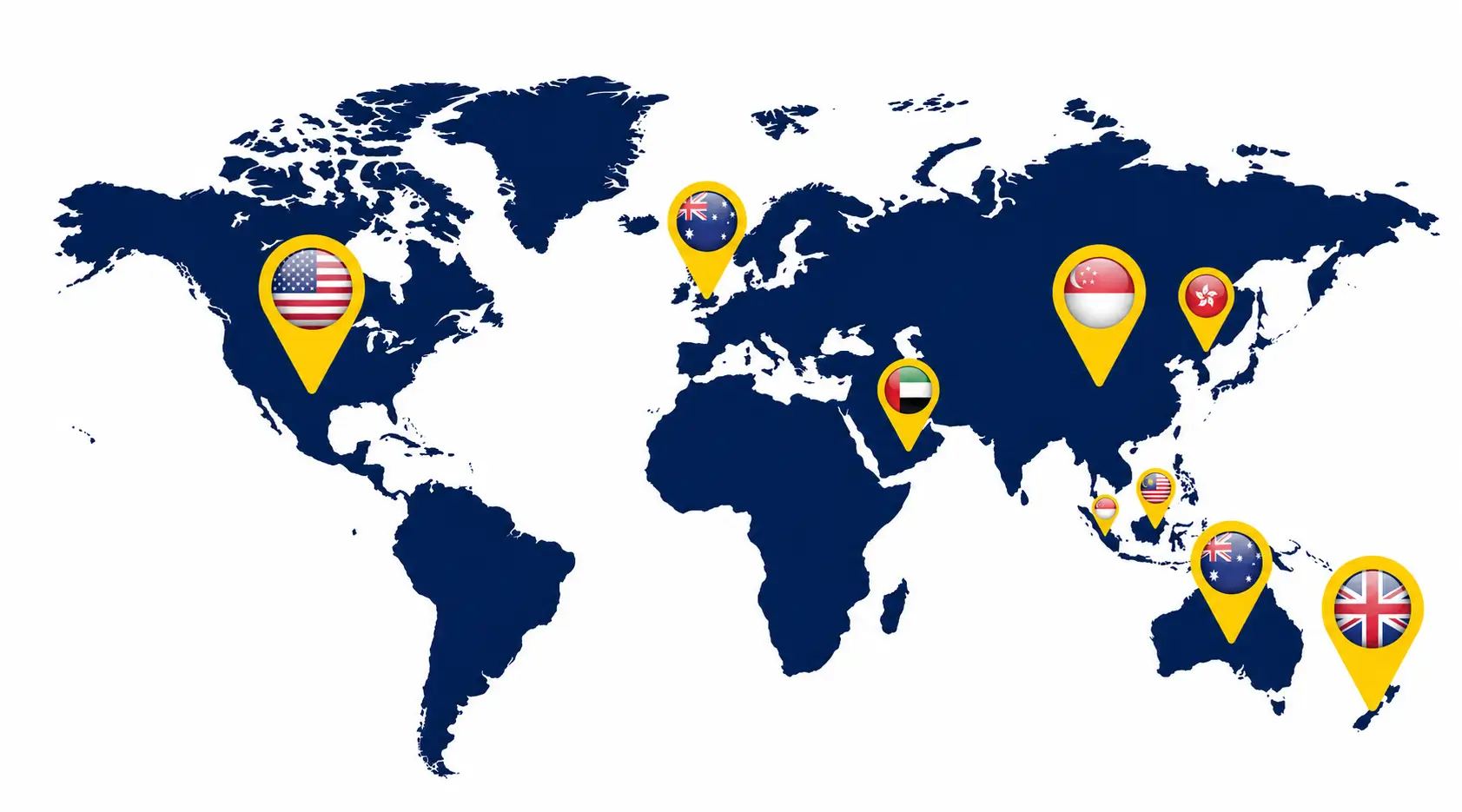
The NCC foundation programme is recognised by universities in the UK, Australia, Canada, China, Singapore, New Zealand, the USA, and beyond. Students can enrol in international university branch campuses and continue their studies globally.

 
  • London School of Economics (LSE) (United Kingdom) – Ranked 6th in the world for Social Science and Management*

  • King’s College London (United Kingdom) – Ranked 9th in the world for Psychology

  • University of Nottingham (United Kingdom) – Ranked 86th globally*

  • University of Sheffield (United Kingdom) – Ranked 96th globally*

  • University of York (United Kingdom) – Ranked 78th globally*

  • Deakin University (Australia)*** – Ranked in the top 200 globally*

  • Curtin University – (Australia, Malaysia, Dubai, Mauritius, Singapore) – Ranked 95th globally*

  • University of Queensland (Australia) – Ranked 41st globally*

  • University of Western Australia (Australia) – Ranked 72nd globally*

  • University of Hong Kong (Hong Kong) – Ranked 17th globally*

  • and many more Universities…

     
*According to the QS World University Rankings 2025
According to the Times Higher Education World University Rankings by Subject 2025

***Through the pathway at RIC


FAQs